5 Hidden Habits Quietly Bringing Trouble Into Your Life
The ancients said something that should make anyone stop and think: misfortune and blessing do not come through some fixed door ; people invite them into their own lives.
It is not that heaven is unfair. It is not that fate is already written. It is that through every word, every thought, and every small daily habit, we are quietly writing our own outcome without even realizing it.
Big wrongdoing is like an elephant in the room; everyone sees it, so few dare to do it. The truly dangerous things are the small wrongs, like tiny ants. They seem harmless, so no one pays attention. Day after day, they build up. By the time the basket of wrongdoing is full, it is already too late.
That is the meaning behind the old teaching: if good is not accumulated, it is not enough to build a name; if evil is not accumulated, it is not enough to destroy a life.
And in today’s message, there are five very ordinary habits, common ways of thinking and behaving that most people, including you and me, are likely doing. If we do not notice them and correct them in time, trouble will eventually fall on us.
1. Looking down on small things ; the trap of “small wrongs don’t matter”
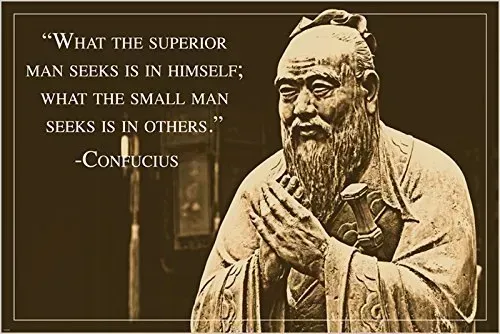
In the I Ching, there is a warning that heavy wrongdoing can pile up until it crushes a person. Confucius commented on this and said that petty people think small good deeds are not worth doing, and small bad deeds are not worth avoiding. So evil builds up until it cannot be hidden, and guilt grows until it cannot be undone.
Liu Bei, before he died, left his son only two short pieces of advice: do not ignore small acts of good, and do not keep doing small acts of wrong. He understood that great collapse does not usually come from one giant failure. It comes from thousands of small wrong choices, repeated again and again.
Do you see yourself in that?
Being five minutes late feels small. Forgetting something you promised feels small. Talking badly behind a coworker’s back feels normal. Reading a message and not replying feels small. Knowing you were wrong but being too lazy to apologize feels small.
Everything feels small. So small that you do not even bother remembering it. But all of it adds up. Together, they become an invisible wall separating you from opportunities, relationships, and trust.
Think of something simple. If you see a stone in the road and move it so the next person will not trip, that is a small good deed. If you see a banana peel and just walk past it, that is a small wrong. These things seem tiny, but a person’s character is built from exactly these details.
People often say heaven sees everything. But the deeper truth is that you yourself are dropping each small coin into the basket every day, even while pretending nothing is happening.
No one collapses because of one fatal mistake alone. What becomes fatal is the habit of saying, “It’s just a small thing, what’s the big deal?”
2. Feeling too safe and forgetting danger
Another dangerous habit is becoming comfortable and forgetting that danger still exists.
The I Ching warns that even when something seems stable, loss may already be close. Confucius explained that the person in danger is often the one who feels most secure. The one about to lose something is usually the one clinging tightly to what they already have. And chaos often grows in times of peace.
The most dangerous moment is not always when you are outside, on a plane, or in battle. Sometimes the most dangerous moment is when you are lying comfortably at home, completely convinced that everything is fine.
People hear strange news stories sometimes ; someone sitting safely in their house gets hit by a car crashing through the wall, or struck by lightning indoors. These stories are not just meant to scare us. They are symbols of a deeper truth.
When your career feels stable, your marriage feels peaceful, your finances feel comfortable, and your status feels secure, that is often when you begin to relax too much. You stop learning because you think you know enough. You stop caring for relationships because you assume they will always be there. You stop training your body because you think your health will last forever.
The seed of collapse in a country is often planted when it is strongest. The seed of failure in a person is often planted when they are most successful.
That is why the I Ching teaches: when at peace, do not forget danger; when secure, do not forget loss; when things are in order, do not forget chaos.
Life moves in cycles. Good times turn into difficult times, and difficult times turn into good times. A wise person never sleeps on victory.
There is a story of an old woman who had saved a little gold. She wrapped it carefully and hid it in what she thought was the safest place. But a thief found exactly that “safest place” and stole everything. The lesson is simple: sometimes the harder you cling to something, the easier it is to lose it.
The smartest person is not the one who only knows how to fight the storm. It is the one who can still stay alert when the weather is beautiful.
3. Rising too high without knowing when to stop
Another dangerous habit is climbing higher and higher without knowing when to pause or step back.
The I Ching says: when the dragon flies too high, there will be regret. Confucius explained that when someone rises too high without support below, without wise people around them, and without a proper foundation, then every move brings regret.
A scholar once told a story from his youth. He arrogantly asked his teacher, “If I had lived in ancient times, would I have passed the highest exam?” The teacher replied, “There would be no problem.” But the young man could not stop there. He added, “I think so too.”
Many years later, he still felt ashamed remembering that extra sentence. The teacher had already answered, but he still needed to add his own proud confirmation. That was exactly the arrogance the I Ching warns about.
History gives many examples. Emperor Xuanzong of Tang was brilliant in his youth and helped build a strong dynasty. But when he reached the peak of power, he did not know how to let go. He trusted flatterers, ignored wise people, and eventually had to flee in disgrace.
Emperor Qianlong was similar. Even after passing the throne to his son, he still would not truly release power. That refusal to stop caused great damage later.
This habit does not only belong to emperors. It appears in managers who refuse to delegate, in successful people who start believing they are the center of the universe, and in anyone who enjoys power so much that they forget how easily it can turn against them.
The dragon flies high into the sky and then looks down, only to realize no one is following anymore. All around it are only cold clouds and empty wind.
The warning is not that success is bad. The warning is that the final step before a fall is often the most confident step of all.
4. Weak character sitting in a high position
Another hidden habit is wanting a high position without building enough inner strength to carry it.
The I Ching gives a powerful image: when the legs of the cooking vessel are too weak, the whole vessel tips over, spilling everything inside. It symbolizes a person holding power or responsibility without the virtue, ability, or strength to support it.
Confucius explained it this way: if your virtue is weak but your position is high, if your wisdom is small but your plans are big, if your strength is limited but your burden is heavy, then disaster is very likely.
There is a story about Yuan Zai, a prime minister in the Tang dynasty. He lacked moral character but was favored by the emperor. Because of that favor, he became arrogant, manipulative, and excessive. He abused power, lived luxuriously, and believed no one could match him.
In the end, he and his whole family were executed. No one destroyed him from the outside. He destroyed himself. He looked strong because of his rank, but inside, the legs of the vessel were already broken.
This habit is still common today. People chase titles, positions, degrees, and status, but forget to strengthen their actual character and ability. They want to lead without learning leadership. They want great responsibility without enough knowledge or emotional steadiness. They want more weight than their inner structure can carry.
The universe does not punish ambition. It punishes ambition without inner development.
The vessel does not fall because what is inside is too heavy. It falls because its legs are too weak.
So if you are working hard to reach a higher level, that is fine. But ask yourself first: are your inner legs strong enough to support what you are asking for?
5. Refusing to reflect and refusing to turn back
The final hidden habit is not reflecting on yourself and not changing when you know you are wrong.
In the I Ching, the hexagram Fu means return ; turning back, correcting yourself, and coming back to the right path. It is about looking inward after every mistake.
Confucius praised his student Yan Hui because whenever he saw something wrong in himself, he noticed it immediately and never repeated it.
That is the spirit of return. If you know you are wrong, then stop. Do not wait until the mistake grows bigger.
But most people do the opposite. We know we are wrong but refuse to admit it. We admit it but refuse to change. Or we change for one day and repeat it again the next day. That cycle keeps spinning, like a blindfolded donkey walking in circles and thinking it is moving forward.
Nan Huai-Chin once said there are three types of people in the face of change. The first type leads change ; they see it coming and move first. The second type follows change ; they notice it and keep up. The third type gets swept away by change and dies without ever realizing they lived wrongly.
The habit of not reflecting traps people in the third type.
There is an old story about Sun Ce. Even after being warned that he was too careless, went out without guards, and was too bold for his own safety, he did not truly change. He listened on the surface but never corrected himself. In the end, he was assassinated before his larger plans could even happen.
The I Ching teaches that the best kind of return is to turn back before you have gone too far. That is the key. Do not wait until you are deeply lost. Correct yourself as soon as you notice the first wrong step.
A good horse runs when it sees the shadow of the whip ; it does not need to be struck first.
So ask yourself: how far have you gone since the last time you truly stopped and looked at yourself? How many times have you known you were wrong, but kept going anyway ; because of pride, habit, or laziness?
The ancients practiced self-reflection daily. Zengzi, a student of Confucius, examined himself every night by asking three questions: Was I loyal in serving others? Was I sincere with friends? Did I truly practice what I was taught?
That is how he lived the spirit of return.
Final reflection
Nan Huai-Chin once said something that stays in the mind for a long time. He said that when heaven wants to repay someone, it first gives them more blessings. Things go too smoothly, too easily, too perfectly; not necessarily because fortune is on their side, but because their stored blessings are being used up quickly so that the consequences arrive sooner.
The five habits above, ignoring small wrongs, falling asleep in comfort, rising too high without stopping, holding a high position with weak virtue, and refusing to reflect ; are not separate traps. They are all connected. And their deepest root is this: not truly knowing yourself.
The wisdom of the I Ching comes back again and again to one central truth: change. Everything changes. The person who understands change can guide their own life. The person who can adapt to change can survive well. The person who refuses to see change gets carried away by it.
These hidden habits are exactly what keep people in that last group ; the group that is swept away without ever understanding why.
We do not read the I Ching to predict the future. We read it to know ourselves better; to understand where we stand in life, what season we are in, and what kind of pattern we are living out.
Misfortune and blessing do not come through some fixed door. But you are the one holding the key.
This is a part of my millionaire mindset shifu series, let me know if you enjoy it so i can make more, https://www.instagram.com/justinthehuncho/
Why AMZSHIFU UNIVERSITY Exists & Our Mission:
I started AMZSHIFU with my cofounders because I know what it feels like to try and fail, again and again.
When I first began my Amazon journey, I didn’t have a mentor. I tried to figure everything out myself, spent thousands of dollars making mistakes, and learned from the wrong “gurus.” It took me years to realize that success is like climbing a mountain:
If you’ve never been to the top, how do you know which path to take?
The climb is steep, and the wrong turn can cost you months or everything. Everything changed when I invested in the right mentor who had already made it to the summit and could guide me step-by-step. That’s when my life and business transformed.
Our mission at AMZSHIFU UNIVERSITY is simple:

To give everyday people a clear roadmap, the right network, and personalized mentorship so they can build real, sustainable businesses without wasting years in trial and error.
We believe in our students. We show up for them. But they must also show up for themselves because no one can steer the ship for you.
Already selling on Amazon or looking to have a mentor by your side? apply for a quick complimentary strategy 1-1 call
Looking to learn about Amazon FBA why saving on fund : check out Your Product Research Mini course here
